Why architecture firms with excellent portfolios still lose major commissions
71% of architecture billings come from repeat clients, so a great portfolio rarely reaches new ones. Kirill Samarits on why strong firms lose commissions, with AIA and Deltek data and what to fix.

Architecture firms with excellent portfolios lose major commissions because a portfolio shows buildings, while the client choosing an architect is trying to judge risk: budget, schedule, approvals, and whether this team has solved a problem like theirs before. Most of the profession's work also flows through existing relationships. In the AIA's firm survey, 71% of billings came from repeat clients. A firm that is brilliant but unknown to a new client starts every competition behind.
I'm Kirill Samarits, Founder & CEO of TERAMOK. We've worked with Aristides Dallas Architects since 2021, and most of our other clients are the developers who hire architects. From that side of the table, I see the same pattern again and again: the best-designed portfolio in the room doesn't always win, and the reasons are fixable.
The profession runs on repeat relationships
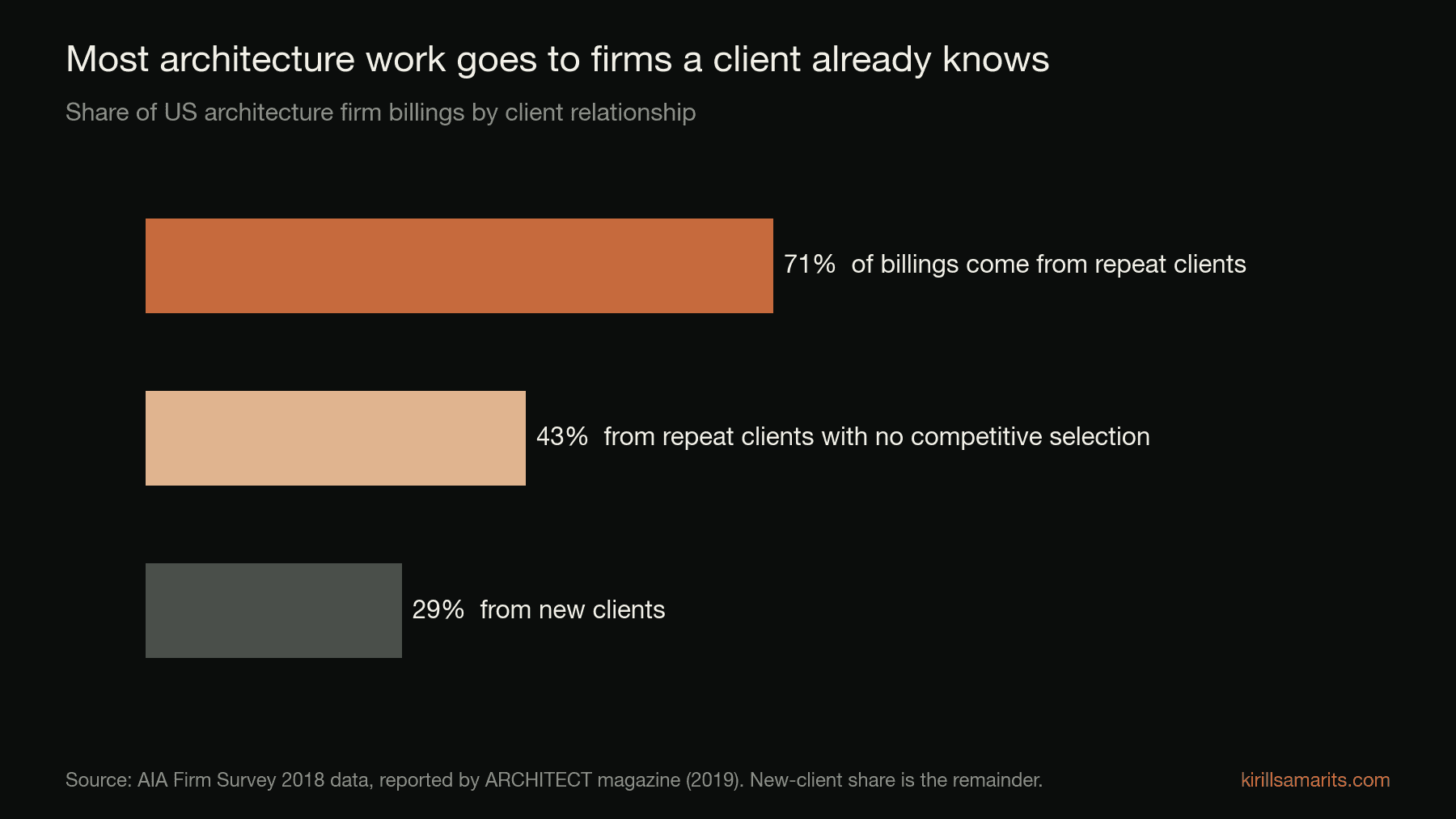
Figure 1. Share of US architecture billings by client relationship. Source: AIA Firm Survey (2018 data), reported by ARCHITECT magazine.
When 71% of billings come from repeat clients, and 43% come from repeat clients who didn't hold a competitive selection at all, the market for new clients is smaller and more contested than it looks. For commercial work, the same data showed 56% of billings came from noncompetitive selection. The firms that win new clients are the ones those clients already feel they know before the shortlist is drawn up.
Most firms are small, and the work is concentrating
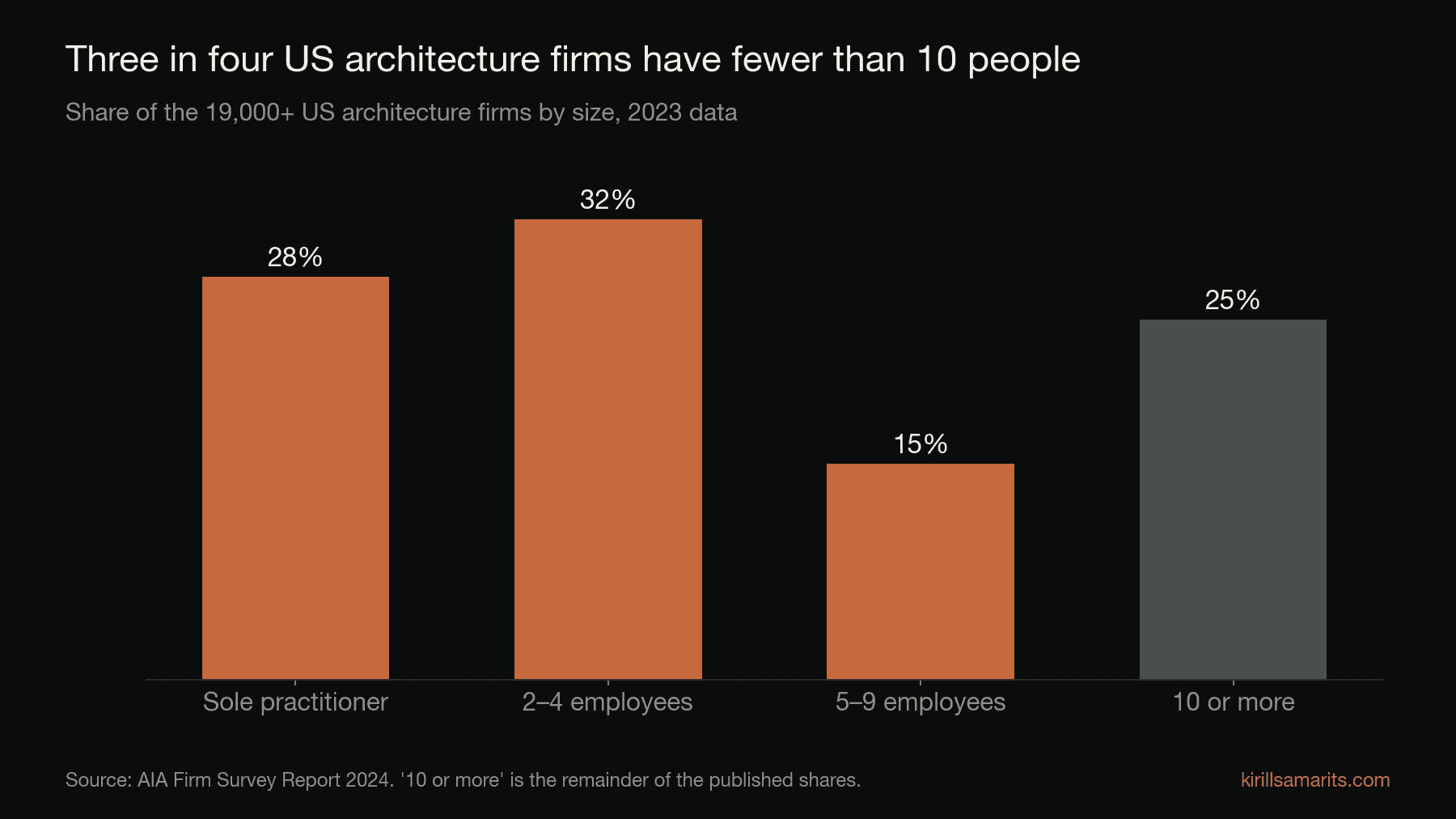
Figure 2. US architecture firms by size, 2023 data. Source: AIA Firm Survey Report 2024.
There are more than 19,000 architecture firms in the United States, and about three in four have fewer than 10 employees. Meanwhile the money is moving to large firms. Between 2015 and 2023, according to the AIA, small firms' share of billings fell by half, midsize firms' share fell by 40%, and large firms' share rose by 40%. Gross billings reached $104.1 billion in 2023.
Small and midsize practices aren't losing because their design is worse. They're losing a visibility contest against firms with business development staff, published case studies and a steady presence in front of developers.
Competition for each commission is rising
Deltek's Clarity study of architecture and engineering firms tracks this every year. Its 2025 edition, covering nearly 700 firms, reported a median win rate of 50%, with proposal volume down 38%. Its 2026 edition, covering 896 firms, described more firms competing for a smaller share of available opportunities despite submitting more proposals. And firms are investing in the response: in an SMPS Foundation study, 56% of AEC firms had increased their number of dedicated business developers, while only 9% had reduced it.
Five reasons strong portfolios lose
1. The portfolio shows the building, not the result
A developer choosing an architect wants to know what the building did: did it get approved, stay on budget, lease up or sell, win the neighbours over? Most portfolios show beautiful photographs and a single line of project data. The firm that writes one clear page per project, covering the client's problem, the constraint, the decision and the outcome, gives the client something to judge. The firm that shows images gives them something to admire.
2. Nobody on the client side knows the people
Clients hire people. Many practice websites hide the principals and project architects behind the firm's name. Named people with their roles on specific projects, and their own voice in articles or talks, make a firm easier to trust and easier to find when someone searches a name.
3. The firm is invisible outside its referral network
If about 29% of billings come from new clients, the firm has to be found by people who don't know it yet. We looked at twelve months of TERAMOK's own Search Console data: people reached our pages through 56 different phrasings of how to market an architecture firm, about 6,200 impressions between them. Principals are searching for help with this. Their potential clients are searching too, for architects by sector, city and building type, and increasingly asking AI assistants for shortlists.
4. No independent proof
A firm's own site is a claim. Publication on ArchDaily, Dezeen or a respected trade journal, awards, and client testimonials are proof. My own photography of Pnoes Tinos Design Holiday Villas by Aristides Dallas Architects is credited on ArchDaily. For the practice, that kind of independent publication does more for credibility with a new client than anything it can say about itself.
5. The firm speaks to architects, not to clients
Design language that impresses peers often loses developers. A developer reading a proposal wants to see their own priorities reflected: cost, programme, planning risk, marketability. The firms that win translate design intent into those terms without dumbing it down.
What winning firms do differently
Common practice | What wins more new commissions |
|---|---|
Image-led portfolio | One written case per key project: problem, constraint, decision, outcome |
Firm name only | Named principals and project leads, with their roles |
Waiting for referrals | A planned publication and awards calendar, plus sector pages clients can find |
Design language for peers | Proposals framed around the client's cost, schedule and risk |
Instagram as the whole strategy | Social as reach; website, case studies and publication as proof |
Table 1. Based on TERAMOK's work with architecture practices and the developers who hire them.
Social media helps with reach. Aristides Dallas Architects' Instagram grew from about 8,000 to 20,000 followers over our years working together. But followers are not commissions, and I'd never present them as if they were. Reach only pays off when the firm also has the written proof and independent publication that a client checks before signing.
Public work adds one more reason to write things down. Under the federal Brooks Act, architecture and engineering services are selected on demonstrated competence and qualifications, with price negotiated afterwards. Documented competence is the currency.
For the full playbook, see how to market an architecture firm: 8 steps to more commissions.
Frequently asked questions
Why do good architecture firms lose to less talented competitors?
Usually because of visibility and proof, not design. 71% of US architecture billings come from repeat clients, according to the AIA, so firms unknown to a client start behind. Firms that win new work show written case studies with outcomes, named people and independent publication.
How many architecture firms are there in the US?
More than 19,000, according to the AIA's 2024 Firm Survey Report. About 75% have fewer than 10 employees.
What is a typical win rate for architecture firms?
Deltek's 2025 Clarity A&E study, covering nearly 700 firms, reported a median win rate of 50%. Its 2026 study described more firms competing for a smaller share of opportunities.
How do developers choose an architect?
Mostly through existing relationships and reputation. In AIA data, 43% of billings came from repeat clients with no competitive selection. For new clients, written evidence of similar projects, the people who will do the work, and independent publication matter most.
Sources
AIA, The latest insights from the 2024 Firm Survey Report, and 2024 key findings infographic.
ARCHITECT magazine, Seventy-one percent of all architecture firm billings come from repeat clients, February 2019 (AIA 2018 data).
Deltek, 46th Annual Deltek Clarity A&E Study (2025) and 2026 Clarity studies.
SMPS Foundation and Stambaugh Ness, AEC.BD report (2024).
40 U.S.C. § 1101, the Brooks Act.
ArchDaily, Kirill Samarits photographer credits.
Kirill Samarits is a real estate marketing executive and entrepreneur based in Chicago and Athens, Founder & CEO of TERAMOK and founder of BUY GREECE and FOS AI. More about Kirill · Architecture marketing