Why leads are a misleading metric for development marketing
A lead is not a buyer. Kirill Samarits on why raw leads mislead developers, what to measure instead, and the data: HBR response-time research, NAR buyer behaviour and TERAMOK campaign funnels.

Leads are a misleading metric for development marketing because a lead is just a contact, and contacts vary enormously in intent. A form filled in on a Sunday evening and an investor asking about three units both count as one. Cost per lead rewards campaigns for producing the cheapest contacts, not the most likely buyers. Developers should measure warm leads, qualified conversations, appointments and reservations, and the speed at which the sales team responds.
I'm Kirill Samarits, Founder & CEO of TERAMOK. We report on leads because clients ask for them, but we plan campaigns around reservations. Here's why, with our own numbers and public research.
What a lead is really worth
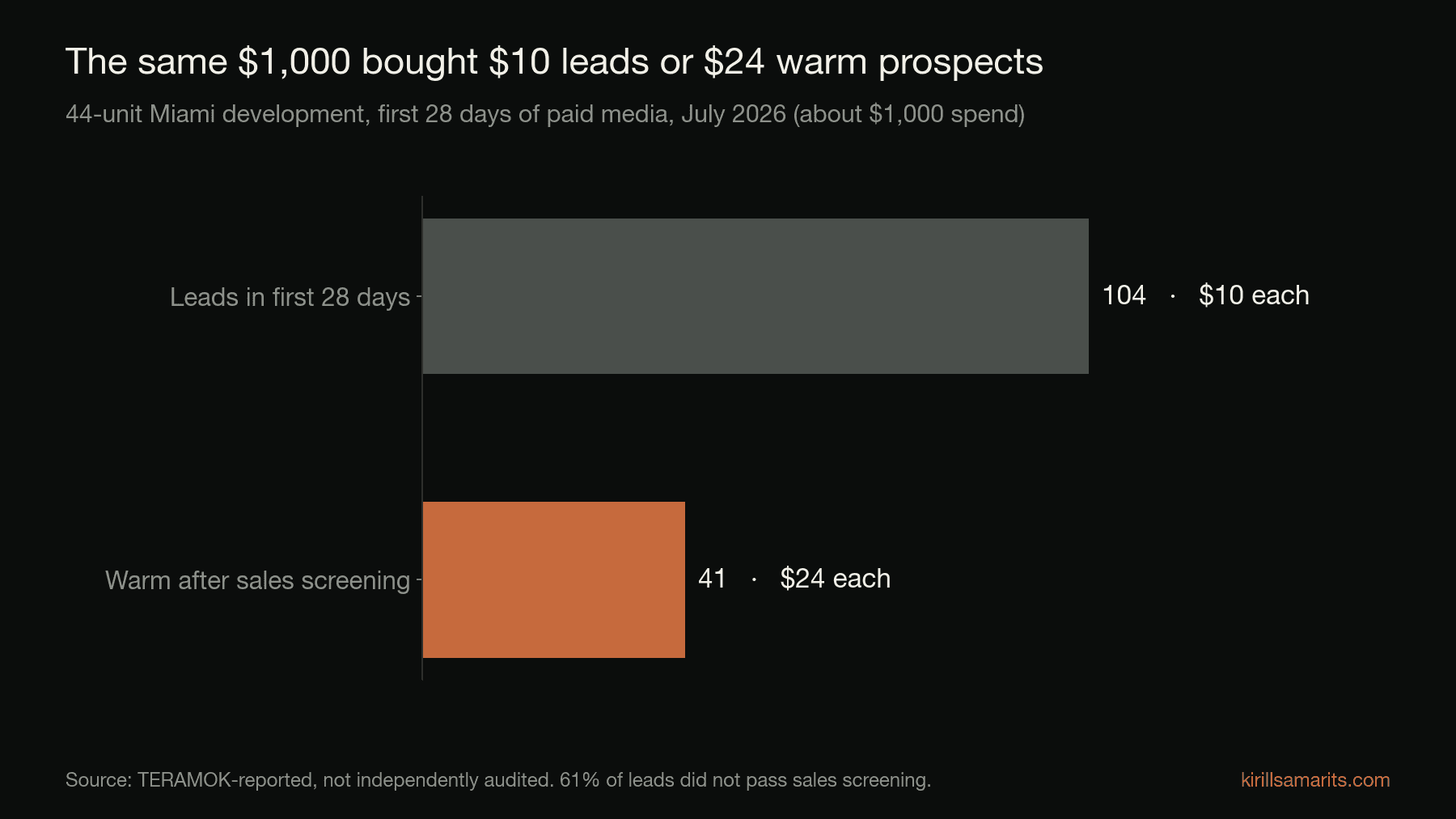
Figure 1. Miami 44-unit development, first 28 days. TERAMOK-reported, not independently audited.
In a July 2026 campaign for a 44-unit Miami development, about $1,000 of media produced 104 leads in 28 days. On a cost-per-lead report that's about $10 each, which looks excellent. After the sales team screened them, 41 were warm. The real cost was about $24 per warm lead, two and a half times the headline number, and 61% of the leads never went further.
Further down the funnel, the ratio gets even more important. On a 48-unit Chicago development, 180+ qualified buyer inquiries produced 22 reservations before groundbreaking, roughly one in eight. And on a large European mixed-use project, the honest cost was $72 per qualified lead. None of these numbers is comparable with a $10 raw lead, and all of them are more useful.
Project | Raw measure | Measure that matters | Ratio |
|---|---|---|---|
Miami, 44 units, July 2026 | 104 leads (about $10 each) | 41 warm leads (about $24 each) | 39% of leads were warm |
Chicago, 48 units | 180+ qualified inquiries | 22 reservations before groundbreaking | About 12% of qualified inquiries reserved |
Europe, mixed-use (NDA), 2026 | 411 leads a month, 2M+ website visits | $72 per qualified lead | Measured at the qualified stage |
Table 1. TERAMOK-reported, not independently audited. Reservations are not completed sales.
Speed decides whether a lead becomes a conversation
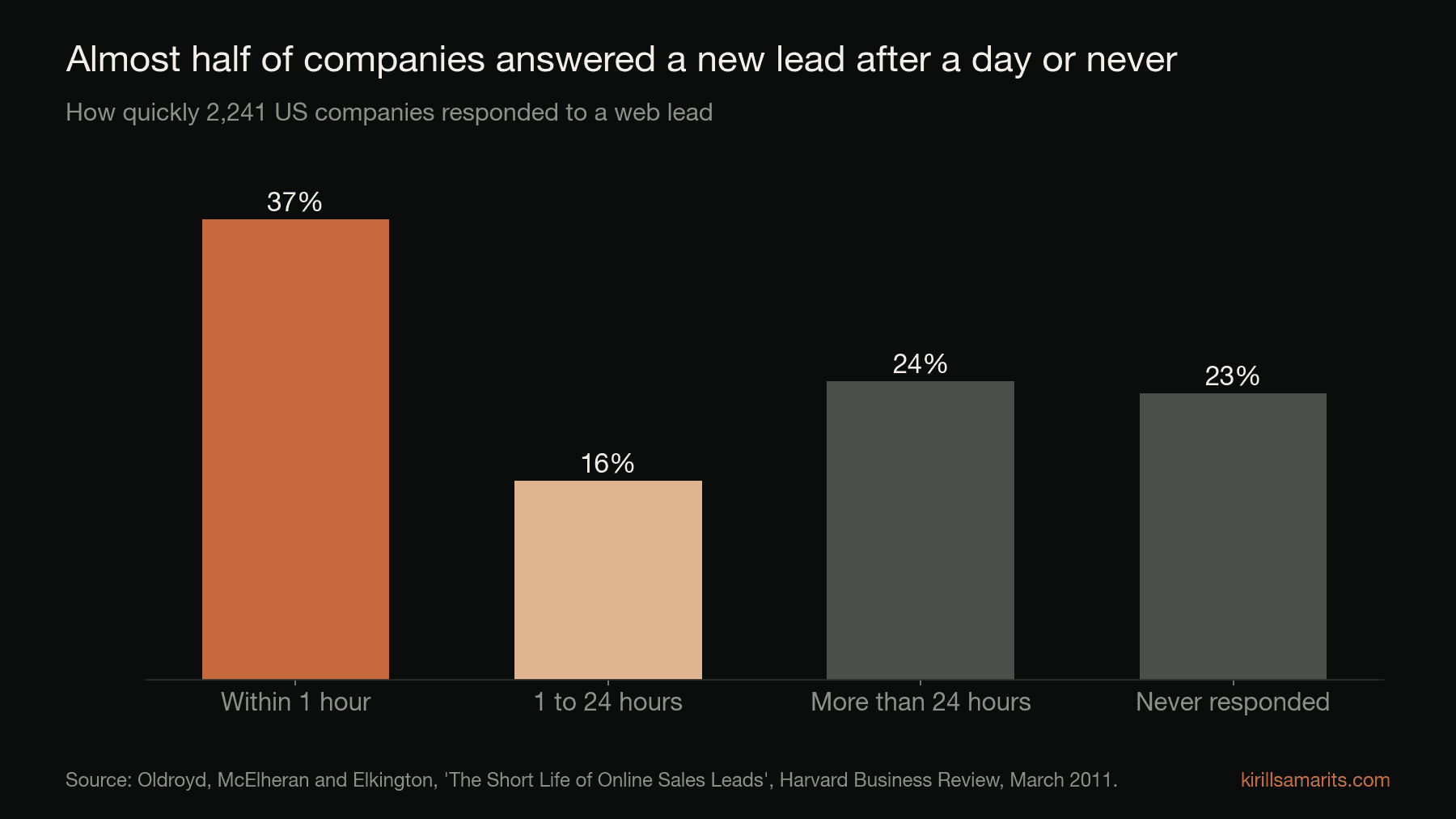
Figure 2. Response times to a web lead. Source: Harvard Business Review, 'The Short Life of Online Sales Leads', 2011.
The best-known study of lead response is old, but nothing since has overturned it. When researchers sent test leads to 2,241 US companies, 37% responded within an hour, 24% took more than a day and 23% never responded. Among those that did, the average response time was 42 hours. In a second dataset of 1.25 million leads, companies that tried to contact a lead within an hour were nearly seven times as likely to have a meaningful conversation with a decision maker as those that waited even one more hour, and more than 60 times as likely as those that waited 24 hours or longer.
A campaign can produce excellent leads and still fail if nobody calls them back that day. That's why response time belongs in every development marketing report, next to cost per lead.
Buyers make up their minds before they contact you
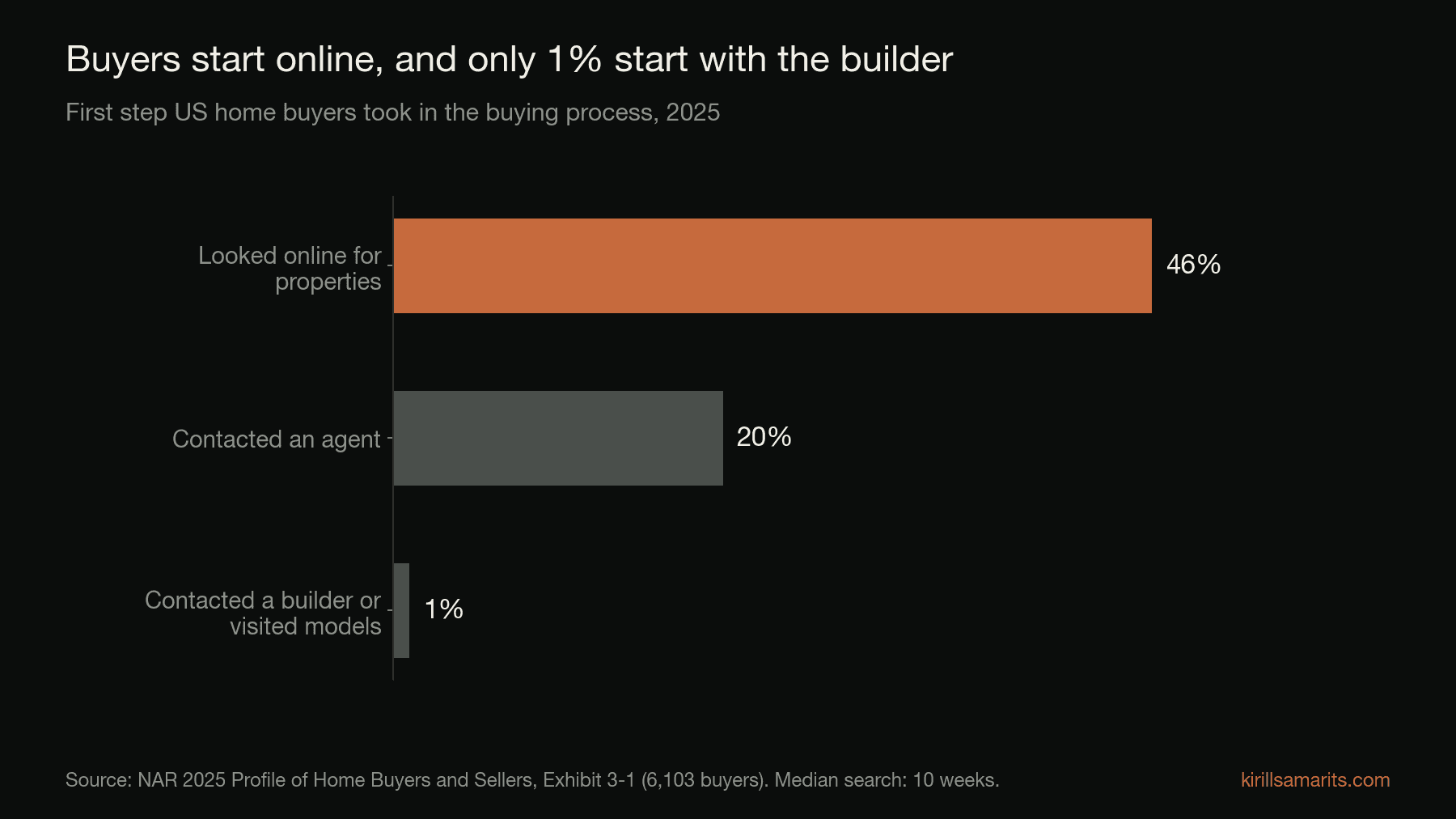
Figure 3. First step buyers took, 2025. Source: NAR 2025 Profile of Home Buyers and Sellers.
According to the National Association of Realtors' 2025 buyer profile, 46% of buyers started by looking online for properties, and only 1% started by contacting a builder or visiting models. Buyers searched for a median of 10 weeks, 52% found the home they bought online, and 74% interviewed only one agent. By the time someone fills in your form, they've often done most of their research and have a shortlist. The first reply is frequently the only chance to get onto it.
What to measure instead
Stage | Metric | Why it matters |
|---|---|---|
Contact | Leads, and cost per lead | Useful for spotting broken campaigns, not for judging good ones |
Response | Share of leads contacted within one hour | The strongest early predictor of a real conversation |
Qualification | Warm or qualified leads, and cost per qualified lead | The first number you can plan sales around |
Meeting | Appointments, site or gallery visits | Shows buyers are comparing you with a shortlist |
Commitment | Reservations and deposits, and cost per reservation | What lenders and partners care about |
Close | Contracts signed and closed sales | The only number that pays for the building |
Table 2. The development marketing metrics TERAMOK reports, in funnel order.
Zillow's own guidance to agents points the same way. It reports that when an appointment is confirmed on the first call, the buyer and agent are three times more likely to transact. The appointment, not the lead, is the milestone.
How to fix your reporting this month
Add a screening field to your CRM. Every lead gets marked warm, cold or invalid within 48 hours.
Report cost per warm lead and cost per reservation. Keep cost per lead, but move it to the bottom of the report.
Track response time. Measure the share of leads called within an hour, and staff for it.
Split results by source. Paid social, search, portals, brokers and referrals produce very different buyers.
Write down your inquiry-to-reservation rate. Use it to size the next campaign backwards from the sales target.
Frequently asked questions
Why is cost per lead a bad metric in real estate?
Because leads vary so much in intent. In a TERAMOK Miami campaign, 104 leads cost about $10 each, but only 41 were warm after screening, about $24 each. Cost per lead rewards cheap contacts rather than likely buyers.
What should real estate developers measure instead of leads?
Warm or qualified leads, response time, appointments, reservations and contracts, with the cost of each. In TERAMOK's Chicago campaign, about 12% of qualified inquiries became reservations, which is the ratio that sizes a campaign.
How fast should you respond to a real estate lead?
Within an hour. Harvard Business Review research found that companies contacting a lead within an hour were nearly seven times as likely to have a meaningful conversation as those waiting another hour, and over 60 times as likely as those waiting a day.
How do home buyers start their search?
Online. NAR's 2025 profile found that 46% of buyers started by looking online, only 1% by contacting a builder, and 74% interviewed only one agent.
Sources
Oldroyd, McElheran and Elkington, The Short Life of Online Sales Leads, Harvard Business Review, March 2011.
National Association of Realtors, 2025 Profile of Home Buyers and Sellers highlights.
Zillow, Premier Agent Conversion Playbook, October 2023 (Zillow-reported).
TERAMOK, results ledger. Client figures TERAMOK-reported, not independently audited.
Kirill Samarits is a real estate marketing executive and entrepreneur based in Chicago and Athens, Founder & CEO of TERAMOK and founder of BUY GREECE and FOS AI. More about Kirill · Real estate marketing