The hidden cost of hiring a marketing agency after groundbreaking
Hiring a marketing agency after groundbreaking costs developers months of interest, weaker presales and a longer sell-out. Kirill Samarits shows the math with Census, NAHB and Federal Reserve data.
The hidden cost of hiring a marketing agency after groundbreaking is time, and time on a development is paid for in interest. A late agency needs months to build the brand, website and audience before it can produce buyers, so the sales curve starts later, more units are still unsold at completion, and the developer carries them at builder borrowing rates that NAHB measured at 10% to 13% a year, including fees, in mid-2026. Marketing itself is cheap. Starting it late is expensive.
I'm Kirill Samarits, Founder & CEO of TERAMOK. A lot of our clients call us after the foundations are poured. We can still help, but I've learned to show them what the delay has already cost, so the next project starts earlier. Here is that math.
Cost 1: interest on unsold units
Construction and development loans are expensive, and fees push the real cost well above the headline rate. NAHB's survey of builders' acquisition, development and construction lending for the second quarter of 2026 put the numbers like this:
Loan type | Average contract rate | Effective rate, including fees |
|---|---|---|
Speculative single-family construction | 7.28% | 11.22% to 11.82% |
Pre-sold single-family construction | 7.01% | 11.67% |
Land development | 8.09% | 12.59% |
Land acquisition | 7.77% | 10.43% |
Table 1. Source: NAHB AD&C Financing Survey, Q2 2026. Covers single-family lending; multifamily terms vary by lender.
For context, the bank prime rate stood at 7.00% and SOFR at 3.90% in late September 2026, according to the Federal Reserve and the New York Fed.
Here's a simple illustration, not a client figure. Take a building with $30M drawn on its construction loan at a 7% contract rate. Interest alone is about $175,000 a month. If a late start to marketing leaves the building half-sold at completion and adds four months to the sell-out, the interest on that half of the loan is about $350,000, before taxes, insurance, HOA dues on unsold units and price cuts. Put your own loan balance and rate into the same arithmetic. The number is usually larger than the whole marketing budget.
Cost 2: finished homes are selling more slowly
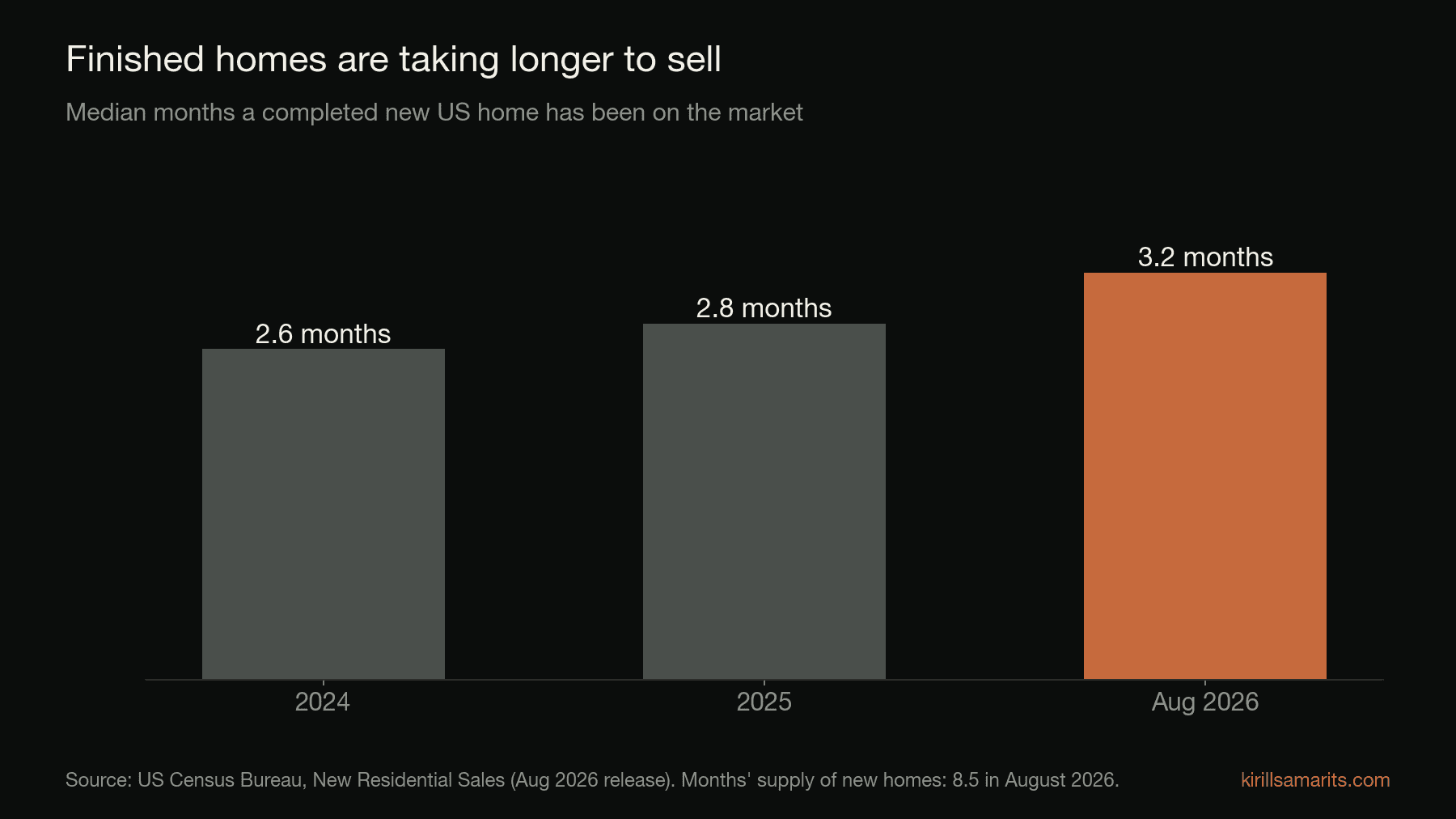
Figure 1. Median months on the market for completed new US homes. Source: US Census Bureau, New Residential Sales.
The market is not absorbing finished inventory quickly. The median completed new home had been on the market for 3.2 months by August 2026, up from 2.6 months in 2024, and months' supply of new homes stood at 8.5. In 2025, 58% of new US homes were sold only after they were finished. A project that reaches completion with a thin sales pipeline joins that queue.
Cost 3: weaker presales mean weaker financing
Presales are leverage. For new condominiums, Fannie Mae will only buy unit buyers' mortgages once at least 50% of the units in the project or phase are sold or under contract. Lenders also look at presales and deposits when sizing risk: in one Miami example reported by Bisnow, a developer planned to sell at least 40% of units before seeking construction financing. An agency hired after groundbreaking arrives after the moment when early reservations could have improved those terms.
Cost 4: marketing is cheap, and delay makes it expensive
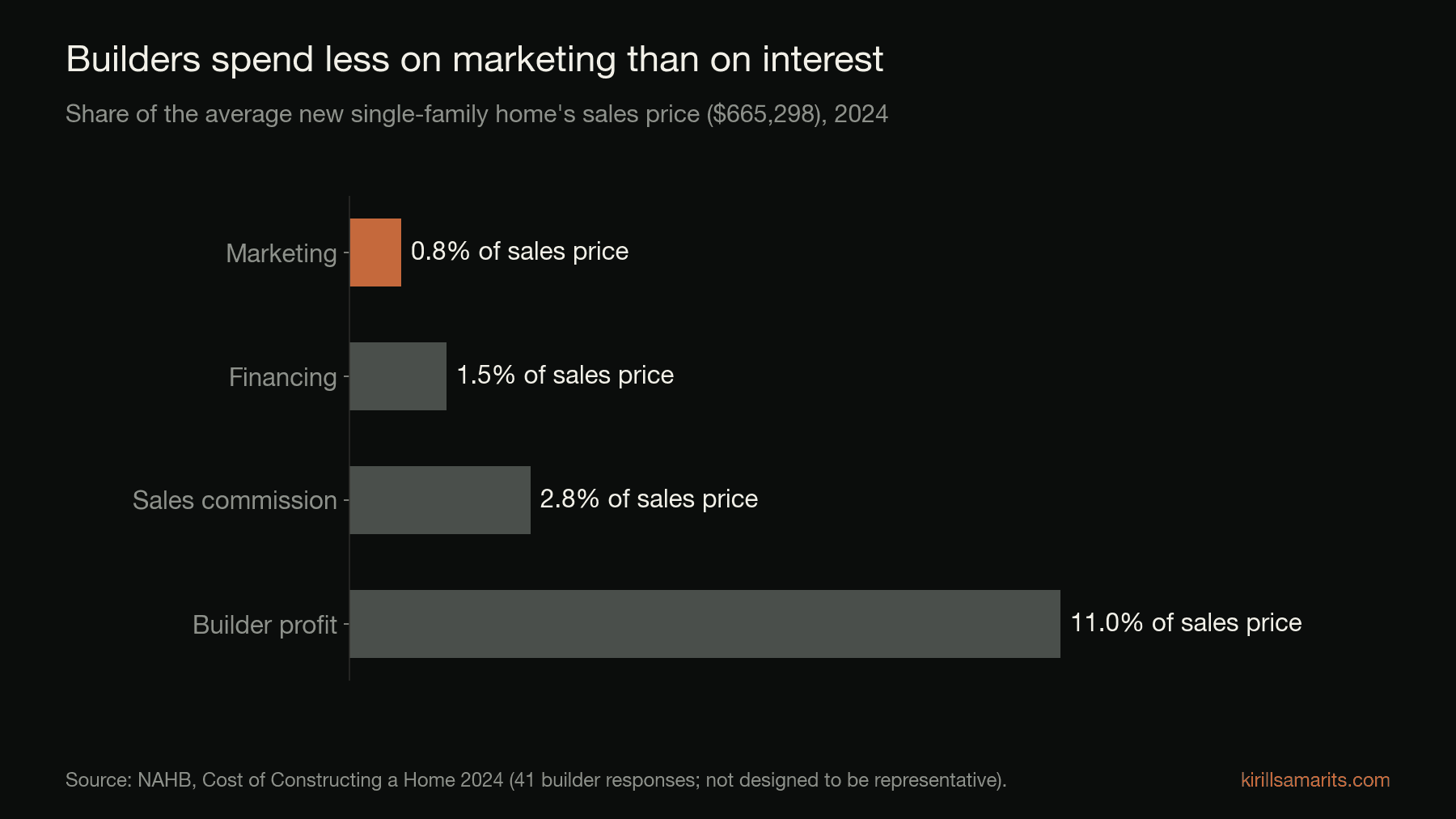
Figure 2. Marketing is the smallest of these costs. Source: NAHB, Cost of Constructing a Home 2024 (41 builders; not designed to be representative).
In NAHB's 2024 cost survey, marketing averaged 0.8% of a new single-family home's sales price, against 1.5% for financing and 11% for builder profit. Marketing is the smallest line. Late marketing inflates the bigger ones: every extra month adds to financing, and every discount needed to clear the last units comes out of profit.
Cost 5: work done twice
Agencies hired late inherit assets made for other purposes: renders commissioned for planning, a name chosen before anyone tested it with buyers, a website built by the architect's team. Some of it can be reused. Much of it has to be redone to sell. Paying for renders, film and a website twice is the most visible part of the hidden cost, even though it's usually the smallest.
What a late start looks like, and what an early start looks like
Agency hired after groundbreaking | Agency hired during design | |
|---|---|---|
First months | Brand, website and content are built from scratch while the construction clock runs | Positioning tested with buyers while design can still change |
Renders and film | Often redone to sell | Briefed as sales assets from the start |
Reservations at groundbreaking | Few or none | Real pipeline; our Chicago campaign reached 22 of 48 units (TERAMOK-reported) |
At completion | Unsold units carried at builder borrowing rates | Smaller unsold inventory, proof content ready for the last units |
Table 2. Comparison based on TERAMOK's experience.
If you've already broken ground
You haven't lost the project, but you should move fast and in the right order. First, fix the basics buyers need to commit: clear deposit terms, a delivery timeline, and answers about the developer and the architect. Second, launch a focused campaign measured on warm leads and reservations, not raw leads. Third, start documenting construction on film and in photographs now, so proof is ready when the renders stop convincing people. And on the next project, bring marketing into the design meetings.
Frequently asked questions
What does it cost to start real estate marketing late?
Mostly interest. Every month finished units stay unsold is financed at builder borrowing rates, which NAHB measured at roughly 10% to 13% a year, including fees, in Q2 2026. A late start can also mean weaker presales for financing, redone renders and websites, and price cuts on the last units.
How much do developers spend on marketing?
Less than on financing. In NAHB's 2024 survey of single-family builders, marketing averaged 0.8% of the sales price, financing 1.5% and sales commission 2.8%. Figures for condominium and multifamily projects vary by project.
How long do finished new homes take to sell?
The median completed new US home had been on the market for 3.2 months in August 2026, up from 2.6 months in 2024, according to the US Census Bureau.
Is it too late to hire a marketing agency after groundbreaking?
No, but the order of work matters. Set clear deposit terms and a delivery timeline, measure the campaign on warm leads and reservations, and start filming construction immediately so you have proof for the later sales phases.
Sources
NAHB Eye on Housing, Cost of credit for builders up since the end of 2025, AD&C Financing Survey Q2 2026.
Federal Reserve, H.15 Selected Interest Rates (prime rate), and New York Fed, SOFR, late September 2026.
US Census Bureau, New Residential Sales, August 2026 release.
Fannie Mae, Selling Guide B4-2.2-03.
Bisnow, As Miami's apartment growth slows, developers swap for condos, May 2, 2024.
Kirill Samarits is a real estate marketing executive and entrepreneur based in Chicago and Athens, Founder & CEO of TERAMOK and founder of BUY GREECE and FOS AI. More about Kirill · Real estate marketing