Why development marketing should begin before the architect finishes the renders
Only 10% of new US homes sold in 2025 were sold before construction began. Kirill Samarits on why development marketing belongs in design meetings, with Census data and a stage-by-stage plan.

Development marketing should begin before the renders are final because the months before groundbreaking are when buyers can still be won cheaply, when their feedback can still change the product, and when early reservations strengthen a project's financing. Most developers wait. In 2025, only 10% of new US single-family homes were sold before construction started, and 58% were sold only after they were finished, according to the US Census Bureau.
I'm Kirill Samarits, Founder & CEO of TERAMOK. We market developments in the United States and Europe, and the single biggest difference I see between easy launches and painful ones is when marketing started. This article explains why, with public data and one of our own campaigns.
What the data says about when homes sell
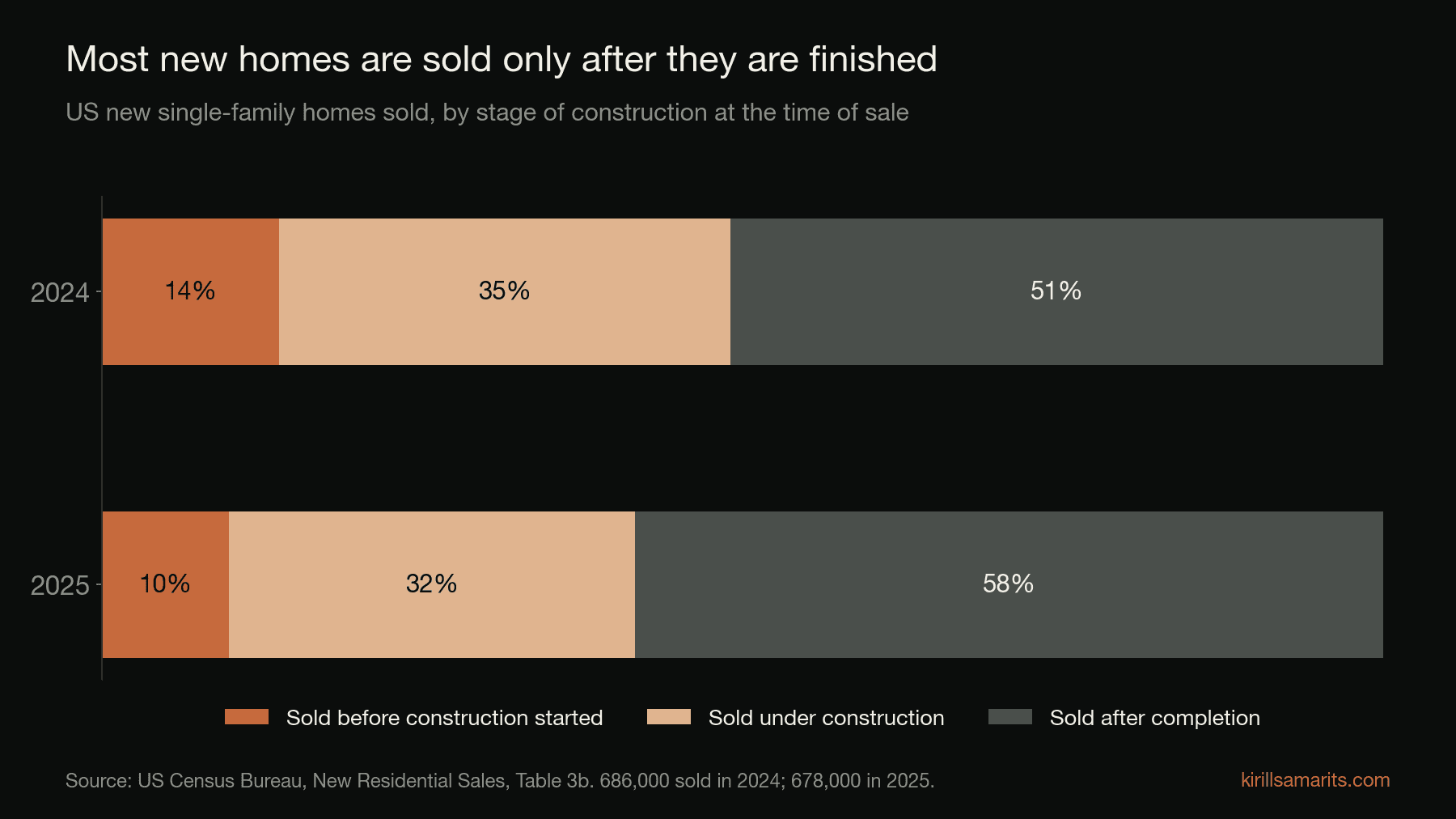
Figure 1. US new single-family homes sold by stage of construction. Source: US Census Bureau, New Residential Sales, Table 3b.
Year | Sold before construction started | Sold under construction | Sold after completion | Total sold |
|---|---|---|---|---|
2024 | 95,000 (14%) | 242,000 (35%) | 350,000 (51%) | 686,000 |
2025 | 67,000 (10%) | 215,000 (32%) | 396,000 (58%) | 678,000 |
Table 1. Census counts a sale when a deposit is taken or a sales agreement is signed. Percentages calculated from the published counts.
The trend moved the wrong way. Between 2024 and 2025 the share of homes sold before construction fell from 14% to 10%, and the share sold only after completion rose from 51% to 58%. A finished home that hasn't sold is inventory the builder is paying to carry. By August 2026, the median completed new home had been on the market for 3.2 months, up from 2.6 months in 2024.
These Census figures cover single-family homes, but the logic is the same for condominiums and larger buildings, where the timelines are longer and the money at stake is bigger.
The window is longer than most developers use
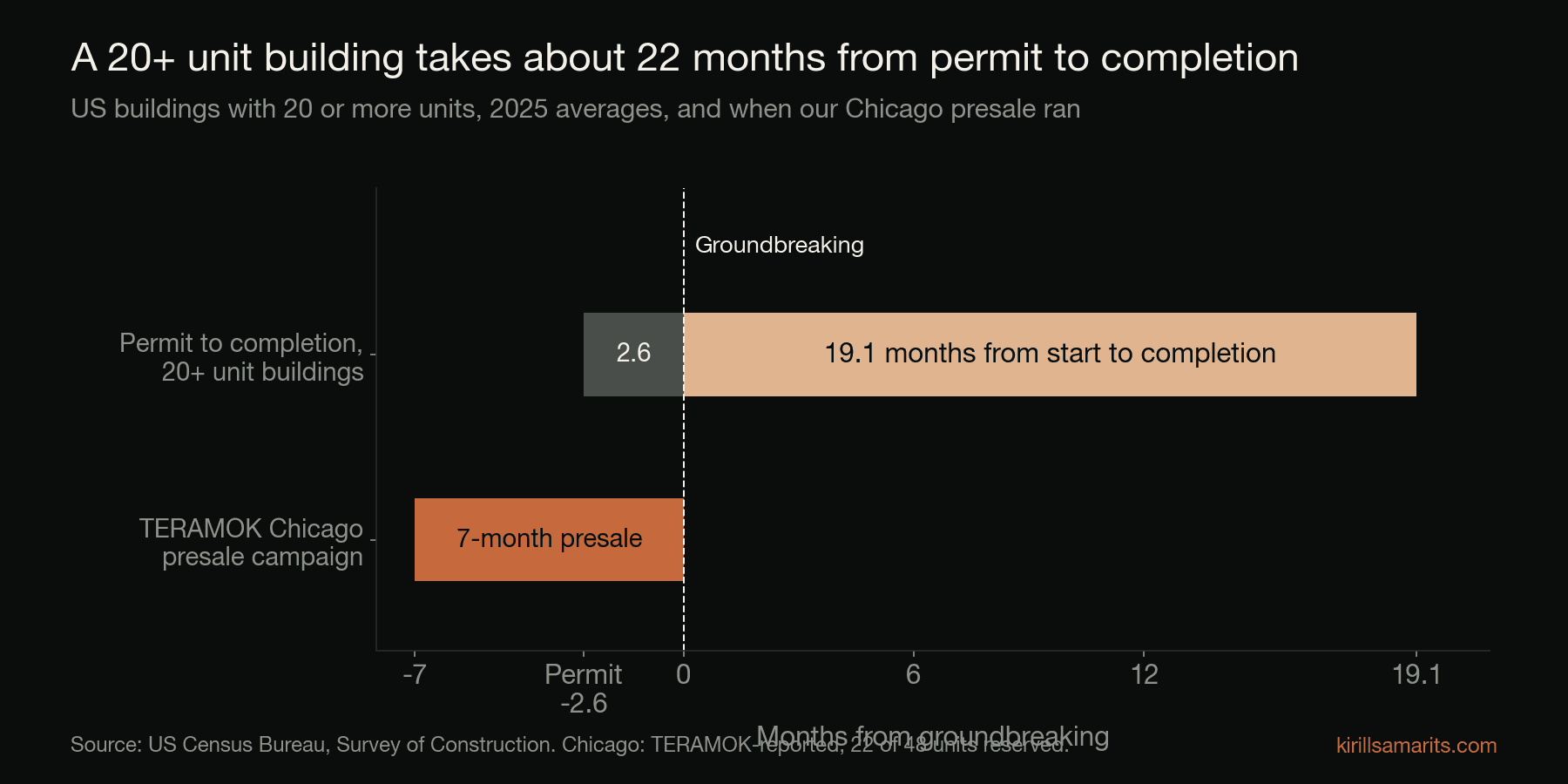
Figure 2. Average time to build US buildings with 20+ units (2025) compared with a seven-month presale campaign. Sources: US Census Bureau, Survey of Construction; TERAMOK-reported campaign.
A building with 20 or more units took, on average, 2.6 months from permit to start and another 19.1 months from start to completion in 2025. That's almost two years between permit and keys, plus the design and approval period before the permit. Every one of those months is time a sales story could be building an audience.
On one of our Chicago projects, a 48-unit building, a seven-month pre-construction campaign produced 180+ qualified buyer inquiries and 22 reservations before groundbreaking, 46% of the building. That result is TERAMOK-reported and not independently audited, the client is under NDA, and reservations are not completed sales. But it shows what the months before construction can do when they're used.
Three reasons to start during design, not after it
1. Buyer feedback can still change the product
While the architect is still drawing, the unit mix, layouts, balconies, storage and parking are still open. Early marketing is also early research. When we test positioning and floor plans with real prospective buyers during design, the questions they ask and the units they choose tell the developer what to adjust. After construction documents are issued, that feedback arrives too late to use.
2. Early reservations support the financing
Presales matter to lenders and to buyers' mortgages. For a new condominium project, Fannie Mae requires at least 50% of the units in the project or legal phase to be sold or under contract before it will buy the unit buyers' mortgages. That is a mortgage rule, not a construction-lender rule, but it means a building with weak presales can leave its own buyers unable to get conventional financing.
Construction lenders look at presales too. In Miami, Bisnow reported one developer aiming to sell at least 40% of its units before seeking up to $60M in construction financing, and a banker explaining that a half-sold building with 30% deposits greatly reduces the bank's exposure. These are individual examples, not a national standard, but the direction is consistent: presales make money cheaper and easier to get.
3. The renders are marketing assets, so direct them as marketing
Renders are usually commissioned for design review and then reused for sales. They're built to show the building, not to sell a way of living in it. If marketing is in the room early, the same budget can produce images of the views, light and rooms buyers actually care about, at the times of day that sell them, and without having to redo the work later.
A stage-by-stage plan
Design stage | What marketing should do | Output |
|---|---|---|
Concept and feasibility | Define the buyer, price band and competing projects. Test the positioning with a small audience. | Positioning statement, target buyer profiles, name shortlist |
Schematic design | Share early plans with prospective buyers and brokers. Record which units and features they ask about. | Feedback log that goes back to the architect, first interest list |
Design development | Brief the render and film team as a marketing shoot. Build the website and the answers to buyers' questions. | Render and film brief, launch website, FAQ on deposits and timeline |
Construction documents and permit | Open reservations to the interest list, with clear deposit terms. Start paid media. | Reservations, a reservation-to-inquiry rate you can plan around |
Groundbreaking and construction | Document construction milestones on film and photo to replace renders with proof. | Construction content for the later sales phases |
Table 2. How TERAMOK sequences development marketing against the design process.
What starting early costs, and what it saves
Starting early doesn't mean spending the whole budget early. The first months are mostly strategy, research, a simple website and a small, targeted audience. The spending rises when reservations open. What it saves is harder to see on a budget line: months of carrying finished, unsold units, a weaker position with lenders, and the cost of redoing renders and campaigns that were built for the wrong buyer.
For comparison, the National Association of Home Builders' 2024 cost survey found that marketing averaged just 0.8% of a new single-family home's sales price, less than financing at 1.5%. Marketing is one of the cheapest levers a developer has. Pulling it forward by six months costs little compared with a single extra month of interest on a finished building.
Frequently asked questions
When should marketing start on a real estate development?
During design, before the renders are final. That gives time to test the product with buyers, shape the renders as sales assets and open reservations before groundbreaking. In 2025 only 10% of new US homes were sold before construction started, according to the US Census Bureau, so early-starting projects stand out.
How many units need to be presold before construction?
There is no single national rule. For new condominiums, Fannie Mae requires at least 50% of the units to be sold or under contract before it will buy unit buyers' mortgages. Construction lenders set their own requirements, and reported examples range from about 40% to half of the units.
How long does it take to build a multifamily building in the US?
In 2025, US buildings with 20 or more units took an average of 2.6 months from permit to start and 19.1 months from start to completion, according to the Census Bureau's Survey of Construction.
Can you sell units before there is anything to see?
Yes. On a 48-unit Chicago development, TERAMOK's seven-month pre-construction campaign reached 22 reservations before groundbreaking, from 180+ qualified inquiries. Buyers need clear answers about the developer, the product and the deposit terms more than a finished building.
Sources
US Census Bureau, New Residential Sales, August 2026 release and Table 3b (houses sold by stage of construction).
US Census Bureau, Survey of Construction, length of time from authorization to start and start to completion, 2025 averages.
Fannie Mae, Selling Guide B4-2.2-03, new and newly converted condo projects.
Bisnow, As Miami's apartment growth slows, developers swap for condos, May 2, 2024.
TERAMOK, Chicago pre-construction case study. TERAMOK-reported, not independently audited.
Kirill Samarits is a real estate marketing executive and entrepreneur based in Chicago and Athens, Founder & CEO of TERAMOK and founder of BUY GREECE and FOS AI. More about Kirill · Real estate marketing